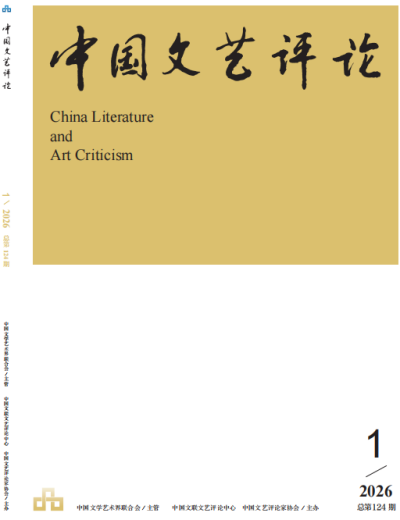
Special Topics•The Rise and Prospect of New Forms of Literature and Art for the General Public (Ⅲ)
■ A Research on the Cross-cultural Communication of New Forms of Literature and Art for the General Public in the Context of Global Co-Creation (PP. 4–14)Wang Wenbin
Abstract: With the deep integration of digital technology and globalization, new forms of literature and art for the general public have gradually become a key force in promoting the global outreach of Chinese culture. This article starts with the core characteristics of new forms of literature and art for the general public and explores their path of premium creation and cross-cultural communication within the global cultural context. By analyzing the four innovative features of new forms of literature and art for the general public—"new masses," "new narratives," "new communication," and "new effectiveness"—the article reveals the developmental new forms of literature and art for the general public in the context of globalization. The study argues that the success of cross-cultural communication in new forms of literature and art for the general public depends not only on content localization and platform algorithmic support, but also on the construction of social co-creation models and emotional resonance. However, in the process of global dissemination, new forms of literature and art for the general public face challenges such as content homogenization, value misguidance, and a lack of evaluation systems. Based on these issues, the article proposes strategies for overcoming these challenges, including content localization, platform cooperation, social co-creation, and emotional identification, which can promote the successful global communication of new forms of literature and art for the general public.
Keywords: new forms of literature and art for the general public, cross-cultural communication, premium creation, social co-creation, emotional resonance
■ The Value Construction of Popular Criticism in the Context of New Forms of Literature and Art for the General Public (PP. 15–27)Zheng Huanzhao
Abstract: Against the backdrop of rapid evolution of digital cultural and deep intervention of platform governance, popular criticism in new forms of literature and art for the general public has transformed from a traditional post-event feedback mechanism into a crucial force that permeates the entire process of content creation, dissemination, and value construction. The three types of evaluation — data-driven, opinion-based, and "secondary-creation"-based — respectively embody the cultural practice logics of "action-oriented feedback," "discursive expression," and "creative reconstruction." Their generation process is embedded in a new mechanism of popular literature and art production characterized by hybrid forms and co-creation practices, while also being profoundly shaped by platform technologies, algorithmic distribution, and the structural forces of the attention economy. At the same time, it faces the risks of a weakening of publicness arising from "nodal aggregation," the "fragmentation of social circles," and the emotionalization of communication. Based on the people-centered orientation of socialist literature and art, there is an urgent need to form systematic guidance from the perspectives of platform governance, public sphere construction, and value mechanism reconstruction: by enhancing the public nature of algorithms and interaction mechanisms, constructing cross-circle aesthetic dialogue structures, and strengthening the integration of values between opinion leaders and professional criticism, so that popular criticism, under the coordinated action of technological empowerment and cultural guidance, would become a key path for the generation of value and the construction of aesthetic publicness in new forms of literature and art for the general public.
Keywords: new forms of literature and art for the general public, popular criticism, value construction, innovation of evaluation mechanisms
Special Feature•The 10thAnniversary of China Literature and Art Criticism
■ Striving to Build an Authoritative Academic Journal for Chinese Literary and Art Criticism in the New Era(PP. 28–33)Dong Yaopeng
Hot Spots Observation•An Analysis of the Multiple-Facet Aspects of Traffic (Ⅰ)
■ On the Influencing Factors and Limitations of Film Box Office (PP. 34–42)Liu Haibo
Abstract: The film Nezha: The Demon Boy Stirs in the Sea became a huge hit in early 2025, once again sparking widespread discussion about "film box office." However, box office figures merely reflect a film's audience size and its level of popularity. Although they are often positively correlated with the film's artistic quality, this correlation is by no means inevitable. There are numerous factors that determine a film's box office. On the production side, the core lies in accurately identifying market trends at the stage of topic selection and planning, and in ensuring solid, high-quality filmmaking. On the distribution side, key factors mainly involve choosing appropriate release windows that match the film's tone, avoiding strong competitors, identifying suitable promotional selling points, and conveying them effectively to the target audiences. The ability to provide social currency for audiences, ignite trending social hot topics, and serve as an outlet for common public emotions has become a new factor influencing film box office in recent years. Film is a medium that combines artistic, utilitarian, and industrial attributes, with each attribute corresponding to different evaluation dimensions. Box office is only one measure of evaluation from an industrial perspective. It should neither be overlooked nor excessively overstated.
Keywords: film box office, artistic quality, topic selection and planning, film distribution and promotion, social currency
■ Multiple Converging Forces Driving the Improvement in the Quality of Literature and Art Criticism in Short Videos(PP. 43–50)He Chuhan
Abstract: This article aims to explore how short videos, with their unique communication characteristics, activate traffic for literature and art criticism and simultaneously improve its quality under the influence of multiple driving forces. Firstly, as a technologically empowered multimodal narrative carrier, short videos restructure the communication relationship between creators and audiences, giving rise to a new paradigm of everyday aesthetics centered on emotional resonance. Secondly, the secondary creation and "cross-circle" dissemination of literary and artistic forms such as TV dramas, poetry, and dance on short video platforms fully demonstrate the enormous potential of short videos in popularizing knowledge and guiding public aesthetics. Thirdly, as an emerging critical paradigm, short video commentary is gradually achieving new breakthroughs in depth and reflection, evident in its content, narrative strategies, and the subjects of its critics. However, at the same time, short video art and literature criticism also faces challenges such as fragmentation and vulgarization. Amid the tension between traffic and quality, short videos are fostering a new era of literature and art critical ecosystem that is more vibrant, diverse, inclusive, and closely connected to the public.
Keywords: short video, literature and art criticism, traffic, new media
Incisive Commentary on Literature and Art
■ How Shall Literature and Art "Respond to the Changes of Our Time" ? (PP. 51–54)Zhang Dexiang
Abstract: The world is undergoing unprecedented changes in a century. China is in the midst of a historical leap from standing up, to growing prosperous, and then to becoming strong, with "becoming strong" being the prominent feature of the new era. From technological self-reliance and self-improvement, and cultural self-awareness and self-confidence, to spiritual independence and autonomy, the Chinese nation has entered a new historical stage. Literature and art must accurately locate themselves within the coordinates of this era, break free from the shackles of "ideological colonization," and transcend the constraints of the Western discursive frameworks. Starting from Chinese practice and articulating Chinese experience through Chinese principles, they should establish independent value systems and narrative frameworks. Only in this way can literature and art truly better "respond to the changes of our present," actively engage with the times, proactively face the future, take a broad view of global transformations, depict the great paths shaped by historical vicissitudes, and project Chinese voices, thus achieving genuine self-awareness in literature and art.
Keywords: global transformation, national rejuvenation, coordinate of the era, self-awareness in literature and art
■ "The Era" Portrayed in TV Dramas: Scene as a Method (PP. 55–64)Gu Yaqi
Abstract: The "era" constitutes a synthesis of natural rhythms, social transformation, and political and cultural contexts, while the "spirit of the era" refers to a core set of values deeply rooted in a national spiritual lineage and oriented toward prevailing value pursuits. In response to the tendency in some current TV dramas to merely attach the label of "era"while failing to authentically express the spirit of the era, this article proposes scenes as a productive methodological approach. Through the construction of scenes across four dimensions—time, space, emotion, and media—TV dramas are able to portray the abstract spirit of the era as a perceptible and immersive embodied experience. Temporal scenes connect history with the present, spatial scenes carry emotions and values, emotional scenes enable a transition from individual resonance to collective identification, and media scenes employ new technologies to expand aesthetic expression and communication effectiveness. Ultimately, TV dramas move beyond simple mirror-like reflection and actively accomplish the aesthetic transformation and meaning-making of the spirit of the era, thereby becoming an important medium for linking grand narratives with individual experience and shaping cultural identity.
Keywords: TV drama, scene, new era, spirit of the era
Theoretical Explorations
■ Symbiotic Participation: An Exploration of Art-Led Rural Revitalization Models (PP. 65–79)Liu Qi
Abstract: In recent years, with the comprehensive advancement of China's rural revitalization strategy, art-led rural revitalization practices have surged nationwide. At the same time, they have exposed a recurring structural dilemma characterized by a cycle of "external intervention–short-term enthusiasm–structural disintegration." Situated within the perspective of rural cultural revitalization, and drawing upon extensive fieldwork and practice-based observation, this study constructs an analytical framework for art-led rural revitalization. It first undertakes a systematic review of current practices from four analytical perspectives—participating actors, resource transformation, endogenous value-generation mechanisms, and local cultural education—and subsequently identifies six relational dilemmas: those between traditional culture and modern life, artistic production and rural development, capital logic and public interest, multi-actor relations, globalization and localization, and short-term performance and long-term cultural self-awareness. On this basis, the study categorizes three prevailing participation models—externally driven intervention, mutually beneficial consumption-oriented logic, and endogenous empowerment—and analyzes their structural limitations, including their detachment from villagers' lived perceptions, tendencies toward capital-driven commodification, and insufficient sustainability. Finally, centering on the defining characteristics and pathways of a "symbiotic participation model," the article examines this model through six key dimensions—sustainability, communicative capacity, economic viability, public authority, public welfare, and spontaneity—together with three strategic pathways: multi-actor collaboration, long-term cultural reflection, and the cultivation of endogenous circulatory mechanisms. It argues that, by responding to the aforementioned dilemmas and overcoming the limitations of existing models, the symbiotic participation model fosters endogenous capacities and long-term momentum for rural cultural revitalization, thereby establishing a sustainable, multi-actor participation mechanism.
Keywords: people-centered approach, art-led rural revitalization, rural cultural revitalization, symbiotic participation
■ Film Intertextuality and Aesthetic Education (PP. 80–89)Wang Yan
Abstract: Film intertextuality is a mature art theory with profound implications for aesthetic education. While rooted in literary studies, it has evolved distinct expressive modes shaped by the unique properties of cinema. This study identifies five primary paradigms of film intertextuality: classical, paratextual, hypertextual, metatextual, and architextual intertextuality. Together, these paradigms provide a relatively comprehensive framework for understanding the possible relationships between a film and other texts, offering viewers more diverse interpretive pathways and a more multidimensional perspective on cinematic experience. Furthermore, the integrative, relational, and opaque qualities of these paradigms help cultivate core competencies in aesthetic literacy. Therefore, integrating intertextual pedagogy into aesthetic education not only expands instructional dimensions but also deepens students' aesthetic experience, offering significant methodological value.
Keywords: aesthetic education, intertextuality, film intertextuality, aesthetic literacy
Preface, Postscript and Book Review
■ "Reproduction" and "Recreation" in Cross-Cultural Theoretical Travel:Implications and Reflections on Wang Yichuan's Essays on Mind-Nature Realism(PP. 90–100)Wang Yaqin
Abstract: From a cross-cultural perspective, the conscious exploration of pathways for the independent construction of Chinese literary and art theory constitutes a central concern of Wang Yichuan's recent book, Essays on Mind-Nature Realism. The author creatively integrates "realism," originating from Western traditions, with the indigenous Chinese tradition of mind-nature theory theoretically, thereby reconstructing a new paradigm of contemporary Chinese literary and art theory — "mind-nature realism". In this sense, the book itself serves as a paradigmatic example of theoretical travel characterized by a spirit of exploration and a pioneering orientation. On the one hand, the essay moves beyond passive reception in the process of theoretical travel and, with a high degree of theoretical self-awareness, constructs a systematic framework ranging from philosophical ontology to literary and artistic practice, thereby serving as a model for the construction of an independent knowledge system in current Chinese literary and art theory. On the other hand, it successfully bridges the divide between grand narratives and micro-level mental imagery, providing an effective set of conceptual tools for the creation, interpretation, and evaluation of Chinese literature and art, and demonstrating strong capacities for theoretical integration and interpretation. However, while successfully achieving the "reproduction" and "recreation" of theory, the essay also reveals certain potential issues, such as the blunting of realism's critical edge and its sentimental dilution, and the ambiguity and practical difficulties involved in defining key concepts of "mind-nature realism". Overall, the proposal of the mind-nature realism paradigm offers positive and meaningful inspiration for the current construction of Chinese literary and artistic theory and is likely to open up further possibilities in future literary and artistic practice.
Keywords: theoretical journey, mind-nature realism, cross-cultural, reproduction and recreation
A Probe into Literary and Artistic Creation
■ Breakthroughs and Unresolved Issues in the Creative Paradigm of Spy-Themed Dance Drama:A Case Study of The Thunder(PP. 101–109)Tang Kun
Abstract: As a contemporary anti-drug–themed dance drama adapted from an existing film and television IP, The Thunder(Pobing)does not replicate the revolutionary spy-themed dance drama paradigm established by The Eternal Wave. Instead, it explores a differentiated creative path grounded in the realistic attributes of its subject matter. This article examines the multiple breakthroughs achieved by The Thunder in terms of its spiritual core, movement aesthetics, and character portrayal, focusing on three aspects: the reconstruction of emotional intention, the adaptation of dance language, and approaches to character development. At the same time, it identifies areas for further improvement, including narrative logic, group portrait function, and the depth of certain roles. Through a dialectical case analysis, this article seeks to provide a reference for the cross-genre application of spy-themed elements as well as for the creative practice and theoretical reflection on realism-oriented dance dramas.
Keywords: spy-themed dance drama, creative paradigm, dance language, character portrayal, realism, The Thunder
Interview with Renowned Experts
■ From an Artist Who Combines Traditional Chinese and Western Styles to a Folk Art Advocate: An Interview with Printmaker and Folk Artist Yang Xianrang (PP. 110–121)Interviewed by Deng Lifeng
Inside Front Cover
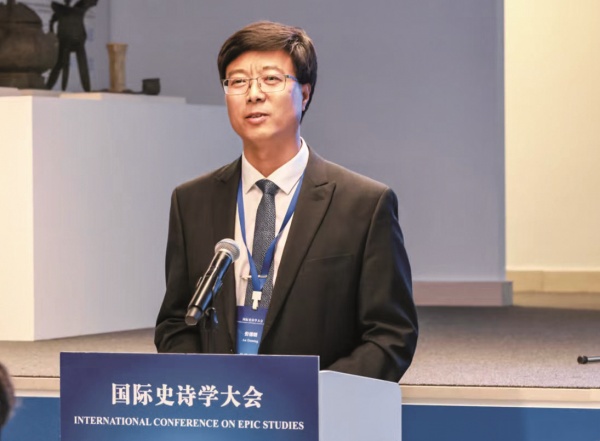
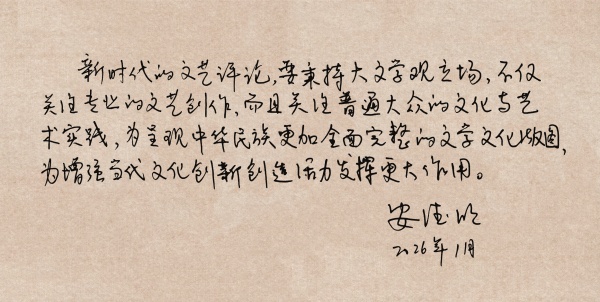
Chinese Literary and Art Critics: An Deming
Inside Back Cover
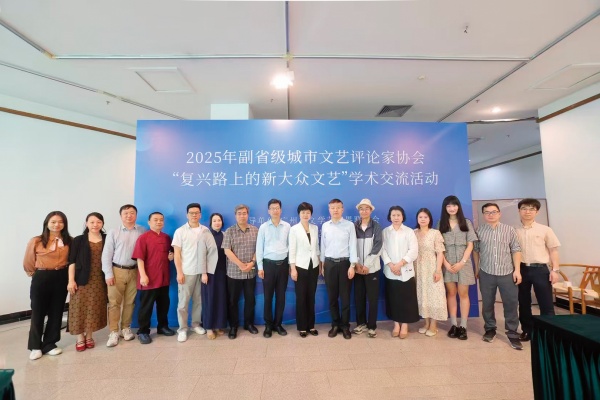
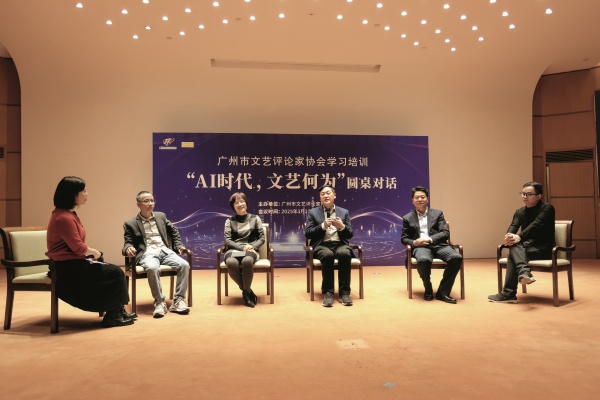
Recommendation of Literary and Art Critics Associations in Sub-Provincial Cities:Guangzhou Literary and Art Critics Association
Back Cover
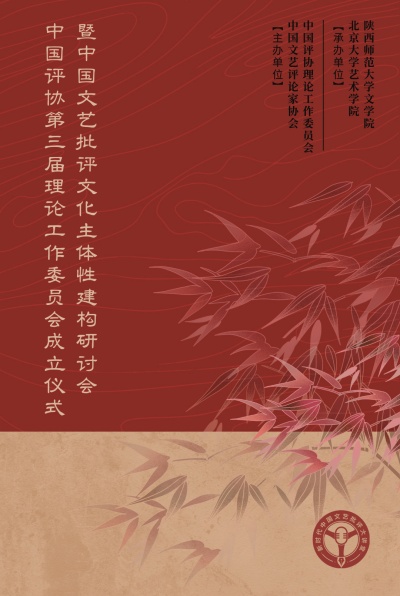
Event Information: Inaugural Ceremony of the Third Theoretical Work Committee of the China Association of Literary and Art Critics & Symposium on "The Construction of Cultural Subjectivity in Chinese Literary and Art Criticism"

中国文艺评论网

“中国文艺评论”微信公号

“中国文艺评论”视频号
团结引导、联络协调、服务管理、自律维权
引导创作、推出精品、提高审美、引领风尚
中国文联文艺评论中心、 中国文艺评论家协会版权所有 京ICP备2020040474号-2
北京市朝阳区北沙滩1号院32号楼文艺家之家A座邮编:100083
中国文艺评论网法律顾问机构:北京唯入律师事务所



 阅读:
阅读: